
Welding & Fabrication for Cast Components and Equipment Assemblies
Drawing-based welding and fabrication for projects that combine cast components with steel plates, profiles, tubes, brackets, supports, or machined parts. Material compatibility, joint requirements, post-weld machining, inspection, finishing, and assembly are confirmed according to each project.
- Cast & Fabricated Assemblies
- Joint & Fit-Up Control
- Post-Weld CNC Machining
- Inspection Support

Can LANJIAN Combine Castings with Fabricated Components?
Yes. LANJIAN can combine castings with plates, profiles, tubes, brackets, supports, or machined parts to produce complete industrial components and equipment assemblies.
Before production, we review the material grades, joint locations, weld requirements, machining datums, critical dimensions, and required inspection. Production can include component preparation, controlled fit-up and welding, distortion control and correction when required, post-weld CNC machining, surface finishing, and final inspection.
The welding route is confirmed according to the drawing, material weldability, structural requirements, and applicable acceptance criteria.
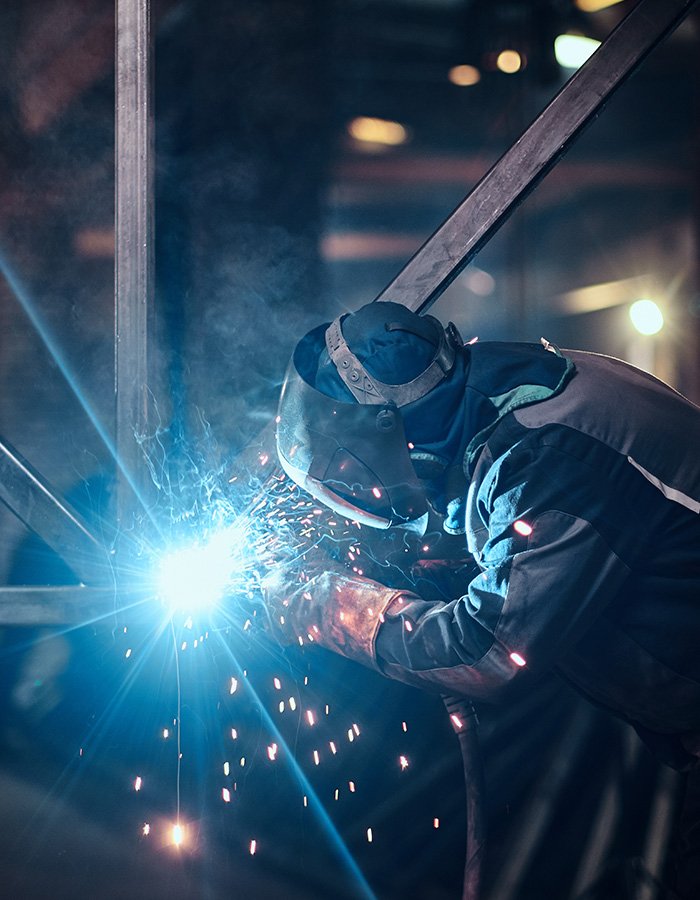
How Does Welding Support Cast Component Manufacturing?
Welding supports cast component manufacturing by joining eligible cast components—particularly cast-steel parts with confirmed weldability—to compatible plates, profiles, tubes, brackets, supports, or machined parts. This combines complex cast geometry with fabricated structural features when producing separate components is more practical than manufacturing the entire structure as one casting.
Combine Compatible Components
Eligible cast components can be joined with material-compatible fabricated or machined parts according to the approved assembly drawing.
Add Structural and Functional Features
Welding can add mounting plates, supports, brackets, stiffeners, connecting sections, and other project-specific features to a cast component.
Complete Downstream Manufacturing
After welding, the assembly can undergo dimensional inspection, post-weld CNC machining, surface finishing, and final assembly as required.
Welding feasibility and the production route are confirmed according to the casting alloy, mating materials, joint design, structural requirements, critical dimensions, and specified acceptance criteria.
Verified Welding & Fabrication Capability for Cast Components
LANJIAN supports drawing-based welding and fabrication for new assemblies that combine weldable cast components with fabricated or machined parts. Material compatibility, welding route, dimensional control, post-weld machining, and inspection requirements are confirmed before production.
Capability Area |
| ||
Cast-Integrated Assemblies | Integration of eligible cast-steel components with steel plates, profiles, tubes, brackets, supports, or machined parts to produce equipment bases, frames, housings, supports, and multi-part assemblies. | ||
Material Combinations |
| ||
Typical Welding Processes | GMAW/MAG is commonly used for carbon- and low-alloy-steel assemblies. FCAW or SMAW may be selected for heavier sections, restricted access, or positional welding. GTAW/TIG may be used for controlled root passes, thinner joints, or applicable stainless-steel work. | ||
Cast Interface Preparation | Casting joint areas are cleaned and prepared by machining or grinding where required. Groove geometry, root gap, alignment, welding access, and surface condition are checked before welding. | ||
Thermal & Procedure Control | Welding parameters, filler metal, preheat, interpass temperature, heat input, welding sequence, and controlled cooling are determined according to the casting grade, section thickness, restraint, and applicable welding procedure. | ||
Fit-Up & Dimensional Control | Fixtures and approved datums are used to control component position. Critical dimensions and machining allowances are checked before, during, and after welding to limit accumulated distortion. | ||
Post-Weld Manufacturing | Weld cleaning and dimensional correction can be followed by CNC machining of mounting faces, bores, holes, threads, and assembly datums. Heat treatment or stress relief is performed only when required by the material, drawing, or approved procedure. | ||
Inspection & Documentation | Visual and dimensional inspection form the basic inspection scope. MT or PT may be used for surface discontinuities, while UT or RT can be coordinated for internal weld inspection when required and geometrically applicable. Required reports and qualification documents are confirmed before production. | ||
Delivery Conditions | Components can be delivered as-welded, post-weld machined, surface-finished, or assembly-ready according to the drawing and purchase requirements. |
Technical Scope Note: Cast-iron welding, casting-defect repair, dissimilar-metal joints, high-hardenability alloy steels, and safety-critical or pressure-retaining welds require separate technical review. Preheat temperature, filler metal, inspection method, and acceptance level cannot be applied universally across all casting grades.
How Does Our Casting-Related Welding Process Work?
Our casting-related welding process covers material review, joint preparation, controlled welding, weld finishing, inspection, and post-weld machining. The exact route is confirmed according to the casting grade, mating materials, joint design, section thickness, final dimensions, and acceptance requirements.
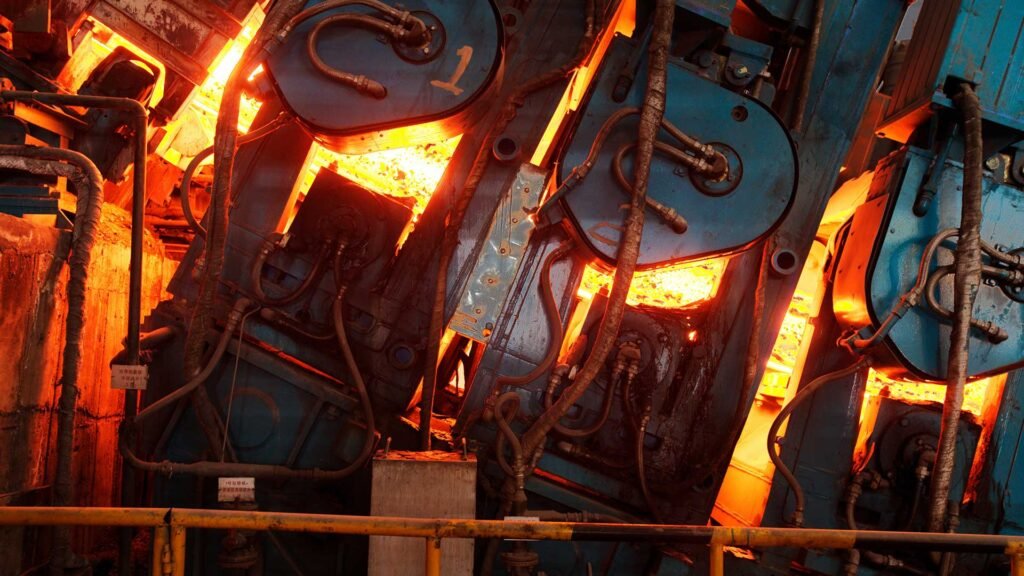
01 — Drawing, Material & Weldability Review
We review the assembly drawing, casting grade, mating materials, weld locations, service requirements, critical datums, machining allowances, and inspection requirements before confirming welding feasibility.
02 — Welding Procedure & Consumable Selection
The welding process, joint configuration, filler metal, pass sequence, preheat, interpass temperature, and post-weld requirements are selected for the applicable material combination.
03 — Cast & Fabricated Component Preparation
Sand, scale, rust, oil, paint, and other contamination are removed from the joint area. Casting interfaces are machined or ground where required, and grooves or bevels are prepared to the approved configuration.
04 — Fixture Setup, Fit-Up & Tack Welding
Components are positioned using the specified assembly datums. Alignment, joint gap, welding access, critical dimensions, and machining allowances are checked before tack welding secures the assembly.
05 — Preheating & Controlled Welding
Preheating is applied only when required by the material or welding procedure. Heat input, interpass temperature, pass sequence, weld cleaning, and component position are controlled to reduce cracking, incomplete fusion, misalignment, and distortion.
06 — Weld Cleaning, Dressing & Post-Weld Treatment
Slag, spatter, and temporary attachments are removed after welding. Welds are ground or blended only where required for inspection, machining, fit, coating, or appearance, without reducing the specified weld size. Controlled cooling, dimensional correction, stress relief, or post-weld heat treatment is performed when required.
07 — Weld & Dimensional Inspection
Weld appearance, profile, joint condition, and assembly dimensions are checked against the approved requirements. MT, PT, UT, or RT can be coordinated when specified and applicable to the material and joint geometry.
08 — Post-Weld Machining & Final Delivery
Mounting faces, bores, holes, threads, and assembly datums can be CNC-machined after welding. Final production may include surface finishing, assembly, dimensional verification, inspection documentation, and packaging.
How Is Casting-Related Welding Quality Controlled?
Quality is controlled against the approved drawing, material specifications, welding procedure, and inspection plan. Key controls focus on preventing cracking, incomplete fusion, porosity, distortion, and dimensional deviation.
01 — Material & Drawing Verification
Casting grades, mating materials, weld requirements, critical datums, machining allowances, and acceptance criteria are confirmed before welding.
02 — Joint & Fit-Up Control
Joint cleanliness, groove geometry, root gap, alignment, tack welds, welding access, and pre-weld dimensions are checked before final welding.
03 — Procedure, Welder & Consumable Control
The welding process, filler metal, shielding gas, and consumable handling are matched to the material combination. Required welding procedures and welder qualifications are verified when specified.
04 — Thermal & Welding Parameter Control
Preheat, interpass temperature, current, voltage, travel speed, heat input, and pass sequence are controlled as applicable. Intermediate dimensions are monitored to limit cracking and distortion.
05 — Weld Finishing & Post-Weld Control
Slag, spatter, and temporary attachments are removed. Grinding, controlled cooling, dimensional correction, stress relief, or heat treatment is performed only when required and must not reduce the specified weld size.
06 — Inspection & Final Release
Completed welds receive visual and dimensional inspection. MT or PT may be used for surface discontinuities, while UT or RT may be applied for internal inspection when specified and suitable.
Hardness or production-coupon testing, and leak or pressure testing for pressure-retaining components, are performed only when required. Final release follows the approved drawing, acceptance criteria, and required inspection records.
Questions Buyers Ask About Casting-Related Welding
Clear answers about welding scope, material compatibility, dimensional control, inspection, machining, and final delivery.
LANJIAN can weld suitable cast components to steel plates, profiles, tubes, brackets, supports, and machined parts according to customer drawings. The result may be a welded structural component, equipment base, housing assembly, support, or other multi-part fabrication.
Yes. We review the casting grade, mating materials, weld symbols, joint details, critical dimensions, machining datums, inspection requirements, and final delivery condition before confirming production.
No. Weldability depends on the casting grade, composition, heat-treatment condition, section thickness, joint restraint, and service requirements. Cast iron, dissimilar materials, casting repair, and difficult alloy grades require separate technical evaluation.
Yes. Welding interfaces and locating features can be prepared before assembly, while critical faces, bores, holes, and datums can be finish-machined after welding to achieve the required fit and dimensions.
Joint preparation, fit-up, fixtures, welding sequence, heat input, preheat, interpass temperature, and intermediate dimensions are controlled as required by the material and approved process. Machining allowance or dimensional correction may be included when necessary.
Visual and dimensional inspections are performed according to the agreed requirements. MT, PT, UT, or RT can also be coordinated when specified and suitable for the material, weld configuration, and acceptance standard.
Welded components can be supplied As-Welded, Post-Weld Machined, Surface-Finished, or Assembly-Ready, depending on the drawing and project requirements.
Please send the assembly drawing, material grades, weld requirements, critical dimensions, machining requirements, inspection standard, quantity, and required delivery condition.
Ready to Turn Your Cast Components Into a Reliable Welded Assembly?
Send your assembly drawing, 3D model, or available project requirements. LANJIAN will review the casting and mating materials, joint design, welding feasibility, critical dimensions, inspection requirements, and final delivery condition before quotation.
- Casting and Mating Material Weldability Reviewed
- Joint Design, Fit-Up and Critical Datums Checked
- Welding, Inspection and Post-Weld Machining Coordinated
- Quotation Based on a Confirmed Welding Scope
Privacy note:
Your drawings and project information are kept confidential and used only for technical review, quotation, and order execution.
Prefer Email?
Start Your Welding Project
Send what you have. We’ll review whether the materials and assembly design fit our casting-related welding capability and confirm what is still required before quotation.