
Custom Lost Foam Casting for Industrial Components
LANJIAN manufactures custom lost foam castings for industrial equipment, including housings, transmission parts, and structural components, based on customer drawings.
Before production, we review the material grade, casting geometry, foam pattern and coating requirements, machining allowances, and inspection criteria. The confirmed route then covers pattern preparation, coating, dry-sand molding, pouring, cleaning, and inspection.
- Drawing-Based Custom Production
- Foam Pattern & Cluster Planning
- Coating & Dry-Sand Process Control
- Lost Foam Casting Quality Control
Scope: Custom lost foam castings for industrial equipment—not complete machines.

What Is Lost Foam Casting?
Lost foam casting is an evaporative-pattern metal casting process in which a refractory-coated foam pattern is embedded in compacted, unbonded dry sand and remains in place during pouring. As molten metal enters the mold, the foam progressively decomposes and is replaced by metal, which then cools and solidifies into the required casting shape.
The foam pattern is produced with the required shrinkage and machining allowances and may be assembled from multiple sections to form complex external or internal features. The completed pattern or cluster is coated, dried, placed in a flask, surrounded by dry sand and compacted through controlled vibration. Vacuum may also be applied depending on the molding system.
Because the pattern is not removed before pouring, lost foam casting does not require a conventional mold parting line. Some features that would normally require separate sand cores may also be integrated into the foam pattern. Final process suitability depends on the alloy, casting geometry, foam pattern, coating, sand compaction, pouring conditions and required dimensional control.
When Is Lost Foam Casting the Right Choice?
Lost foam casting is commonly considered when a component can benefit from one or more of the following:
- Complex external geometry or internal features built into an assembled foam pattern
- Fewer separate sand cores and no conventional mold parting line
- Consolidation of multiple cast features—or previously separate parts—into one casting
- Reduced risk of core shift, mold-half mismatch and parting-line flash
- Production where reduced core-making, cleaning, machining or assembly can offset the foam-pattern cost
Typical candidates include equipment housings, gearbox and transmission housings, pump and valve bodies, and structural castings with integrated passages, ribs or mounting features. Suitability is determined by the geometry and manufacturing requirements rather than the component name alone.
Lost foam casting is not automatically the best route for every part. Simple geometries may be more economical with conventional sand casting, while very low quantities may not justify dedicated foam-pattern tooling. Thin unsupported sections, upward-facing or poorly accessible cavities that are difficult to fill with dry sand, and strict internal-soundness requirements need additional review. Critical mating faces, bearing bores and threads are normally finish-machined. Final suitability depends on the alloy, geometry, section thickness, quantity, foam-pattern route, dimensional requirements and inspection criteria.
Verified Lost Foam Casting Capability
LANJIAN produces custom lost foam castings from approximately 0.5 to 500 kg, with overall dimensions up to 1,500 × 1,000 × 500 mm. Foam-pattern production, dry-sand compaction and the casting route are selected according to the component geometry, alloy, section thickness, production quantity and dimensional requirements.
Capability | Available Range or Options | |
Casting Weight Range | Approximately 0.5–500 kg per casting | |
Maximum Casting Dimensions | Up to approximately 1,500 × 1,000 × 500 mm | |
Typical Minimum Wall Thickness | Typically 3–5 mm; thicker minimum sections may be required for steel castings, larger components or difficult filling paths | |
Foam Pattern Options | CNC-machined foam patterns for prototypes and lower quantities; molded EPS patterns for repeat production; single-piece or assembled pattern construction according to geometry | |
Molding System | Coated expendable foam patterns embedded in dry, binder-free sand with controlled vibration compaction; vacuum assistance may be used when required by the casting route | |
As-Cast Dimensional Tolerance | Typically ISO 8062-3 DCTG 8–10 for stable repeat production; DCTG 10–12 may apply to larger, heavier or more complex castings | |
As-Cast Surface Finish | Typically Ra 6.3–12.5 μm, depending on foam bead size, pattern quality, refractory coating, alloy, casting section and surface location | |
Typical Machining Allowance | Approximately 2–5 mm on specified machined surfaces, depending on casting size, alloy, distortion risk and final dimensional requirements | |
Pattern and Core Capability | No conventional mold parting line is required; complex external forms and suitable internal features can be integrated into the foam pattern, reducing or eliminating separate sand cores | |
Material Options | Gray iron, ductile iron, carbon steel, low-alloy steel, wear-resistant steel and selected stainless steel grades; final suitability depends on the specific grade and casting requirements | |
Production Quantity | Prototypes and lower quantities may use machined foam patterns; molded foam tooling is generally more suitable for repeat and medium-volume production | |
Further Processing | Casting cleaning, heat treatment, CNC machining, surface finishing and assembly can be coordinated according to the required delivery condition | |
Inspection Options | Dimensional inspection, chemical composition verification, hardness or mechanical testing, NDT, third-party inspection and inspection records can be arranged when specified |
Capability Confirmed Against Your Drawing
The ranges above represent our general lost foam casting capability. Final feasibility is confirmed after reviewing the material grade, casting geometry, section thickness, foam-pattern design, sand-filling direction, machining allowance, dimensional tolerances and inspection requirements.
For components with critical mating faces, bearing bores, sealing surfaces, threads or strict internal-soundness requirements, the required machining and inspection plan is confirmed before production.
How Does Our Lost Foam Casting Process Work?
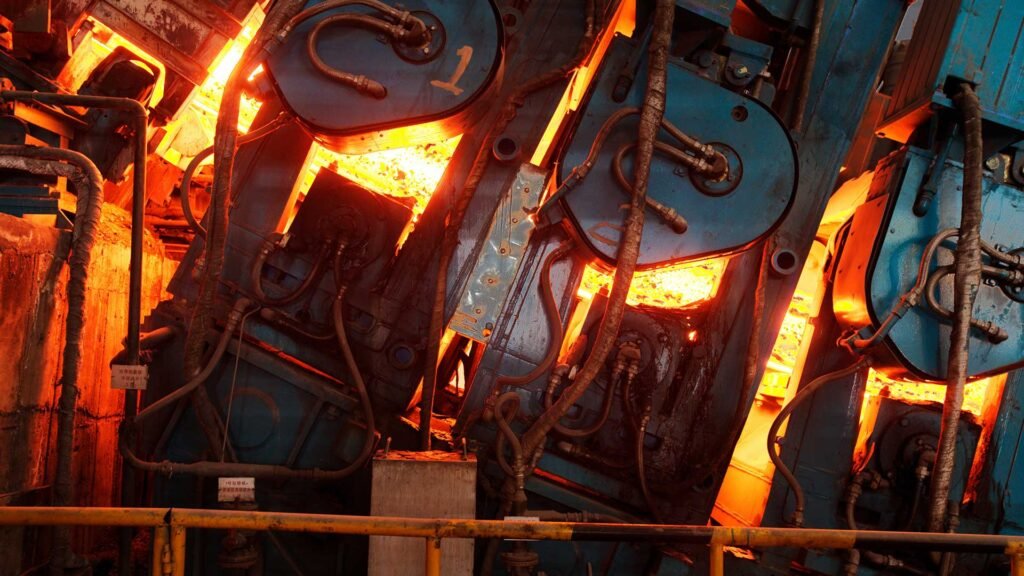
Lost foam casting begins with a dimensionally controlled expendable foam pattern. The pattern is assembled with the gating system, coated, dried and embedded in compacted dry sand. During pouring, molten metal progressively decomposes and replaces the foam pattern before solidifying into the required casting.
01 — Drawing and Process Review
We review the drawing, material, geometry, critical dimensions and inspection requirements before confirming the pattern structure, casting orientation, allowances and gating plan.
02 — Foam Pattern Production
The foam pattern is produced using the approved method. Molded patterns are cooled and aged when required to stabilize their dimensions before assembly.
03 — Pattern Inspection and Assembly
The pattern is checked for dimensional accuracy, distortion and damage. Foam sections, runners and sprue are then assembled, with adhesive joints carefully controlled.
04 — Coating and Drying
The assembled pattern is covered with a permeable refractory coating selected for the alloy and geometry. The coating is dried thoroughly before molding.
05 — Dry-Sand Compaction
The pattern is positioned in the flask, surrounded with dry, binder-free sand and compacted by controlled vibration. After sealing, vacuum may be applied when required by the production route.
06 — Melting and Pouring
The metal composition and pouring temperature are checked before pouring. As molten metal enters the mold, it progressively replaces the foam while decomposition products pass through or are absorbed by the permeable coating.
07 — Cooling and Shakeout
After sufficient solidification and cooling, any applied vacuum is released and the casting is separated from the loose sand. The binder-free sand can be recovered for controlled reuse.
08 — Cutoff, Cleaning and Initial Inspection
The gating system is removed, and the casting is blasted and ground as required. It is then checked for incomplete filling, distortion and visible surface defects.
09 — Heat Treatment, Machining and Final Inspection
Heat treatment and machining are performed when specified. Final dimensional, material, NDT and surface inspections are completed according to the agreed plan before finishing, assembly or packing.
The exact sequence may vary with the alloy, casting geometry and delivery condition. Vacuum assistance, heat treatment, machining and NDT are used only when required by the confirmed production route.
How Is Lost Foam Casting Quality Controlled?
Lost foam casting quality depends primarily on foam-pattern stability, coating performance, dry-sand support, vacuum control and coordinated pouring. These factors are controlled together to reduce dimensional variation, incomplete filling, gas defects and carbon-related defects.
01 — Foam Pattern Quality
Pattern material, density, dimensions and surface condition are checked. For molded-bead patterns, bead fusion and aging are controlled, while assembly alignment and adhesive quantity are checked to reduce distortion and joint defects.
02 — Coating and Drying
Coating coverage, thickness, strength and permeability are controlled according to the alloy and geometry. The coated pattern must be fully dried to reduce gas defects, sand penetration and unstable mold filling.
03 — Dry Sand and Vibration Compaction
Dry, binder-free sand is checked for cleanliness, grain-size distribution and flowability. Controlled vibration ensures that the sand fills accessible cavities and supports the pattern without causing distortion.
04 — Vacuum Control
When vacuum assistance is used, flask sealing, vacuum level and holding time are controlled during pouring and early solidification to stabilize the mold and support gas removal.
05 — Melting, Pouring and Foam Decomposition
Chemical composition, metal treatment, pouring temperature and pouring continuity are controlled for the confirmed alloy and casting route. Stable filling helps decomposition products pass through or be absorbed by the coating, reducing misruns, folds and carbon-related defects.
06 — Casting Inspection and Records
After cleaning, castings are checked for incomplete filling, folds, cracks, sand penetration, surface defects and distortion. Dimensional inspection, material testing, NDT, pressure or leak testing, third-party inspection and reports are arranged when applicable and agreed.
Quality Requirements Confirmed Before Production
Critical dimensions, inspection methods, sampling levels, acceptance standards and required records are confirmed before production. Final inspection follows the approved drawing and agreed inspection plan.
Questions Buyers Ask About Lost Foam Casting
These answers explain the capabilities, limitations, cost factors and quality considerations buyers should evaluate before selecting lost foam casting.
Lost foam casting uses an expendable foam pattern that remains inside binder-free dry sand during pouring. The molten metal decomposes and replaces the pattern to form the casting.
Unlike conventional sand casting, the pattern is not removed before pouring, and separate mold halves and sand cores can often be reduced or eliminated. This makes lost foam casting especially useful for complex, integrated geometries with fewer parting lines and reduced assembly or machining.
Lost foam casting can often eliminate or reduce separate sand cores because internal passages may be incorporated directly into the foam pattern assembly.
However, not every internal geometry is automatically suitable. Dry sand must be able to enter, compact and support each cavity, while the coating must dry completely and allow decomposition products to escape. Enclosed or difficult-to-fill passages require an individual process review.
Yes. Lost foam casting can be used for gray iron, ductile iron, carbon steel, alloy steel and selected wear-resistant or stainless steel grades.
The appropriate material and process route depend on casting geometry, section thickness, mechanical properties, heat treatment and inspection requirements. Ductile iron and steel castings require careful control of foam density, coating permeability and pouring conditions to reduce carbon-related and gas-related defects.
As a preliminary project reference, lost foam castings may range from approximately 0.5 to 500 kg, with overall dimensions up to about 1,500 × 1,000 × 500 mm and typical minimum wall sections around 3–5 mm.
These figures are not universal limits. Final feasibility depends on the alloy, foam-pattern strength, geometry, section transitions, sand compaction, filling distance and required dimensional control. Each component must be confirmed against its drawing.
Under stable repeat-production conditions, lost foam casting may achieve approximately DCTG 8–10 under ISO 8062-3, with typical as-cast surface roughness around Ra 6.3–12.5 μm.
Larger, heavier or more complex ferrous castings may require wider tolerances or a coarser finish. Final results depend on pattern accuracy, pattern aging, coating thickness, sand compaction, alloy shrinkage and casting geometry. Critical tolerances should be identified on the drawing.
Lost foam casting can reduce machining, but it does not eliminate machining for every component.
Bearing bores, sealing faces, mating surfaces, threads, precision holes and other tight-tolerance features are normally finish-machined after casting. Machining allowances should be defined during process planning so the foam pattern, casting datum and CNC setup follow the same dimensional requirements.
Lost foam casting is most economical when complex geometry, integrated internal features or component consolidation can reduce cores, assembly, grinding and machining.
For prototypes or low-volume orders, CNC-cut or manually assembled foam patterns may avoid dedicated production tooling but result in a higher unit cost. For repeat orders, molded foam patterns improve consistency and distribute tooling cost across the production quantity. Buyers should compare total finished-component cost rather than casting price alone.
Typical risks include pattern distortion, misruns, folds, gas porosity, carbon defects, sand penetration and visible marks from foam-pattern joints.
Control begins with stable foam density and dimensions, accurate pattern assembly, complete coating drying, suitable coating permeability and uniform sand compaction. Pouring temperature, filling speed, gating design and vacuum conditions—when vacuum is used—must be matched to the alloy and casting geometry.
Lost foam casting can be used for pressure-containing housings, but pressure tightness is not guaranteed by the casting process alone.
Feasibility depends on alloy quality, wall-thickness distribution, feeding and solidification design, gas evacuation and the location of machined sealing features. When required, inspection may include visual and dimensional checks, magnetic-particle or penetrant testing, ultrasonic or radiographic testing, and an agreed pressure or leakage test.
Provide a 2D drawing or 3D model, material grade, estimated quantity, annual demand, casting weight, critical dimensions and required delivery condition.
Also identify machined surfaces, pressure-retaining areas, heat treatment, surface treatment, NDT, mechanical-property requirements and required inspection reports. If the component was originally designed for conventional sand casting or fabrication, explain the existing route so its geometry can be reviewed for lost foam casting rather than copied without process optimization.
Ready to Turn Your Drawing Into a Reliable Lost Foam Casting?
Send your drawing, 3D model or available component requirements. LANJIAN will review the material, foam-pattern feasibility, casting geometry, machining scope, inspection requirements and delivery condition before quotation.
- Foam Pattern and Geometry Feasibility Reviewed
- Wall Transitions, Sand Filling and Casting Risks Considered
- Heat Treatment, Machining and NDT Coordinated as Required
- Quotation Based on a Confirmed Manufacturing Scope
Privacy note:
Your drawings and project information are kept confidential and used only for technical review, quotation and order execution.
Prefer Email?
Start Your Lost Foam Casting Project
Send what you have. We’ll review whether the component suits lost foam casting and confirm what is still needed before quotation.